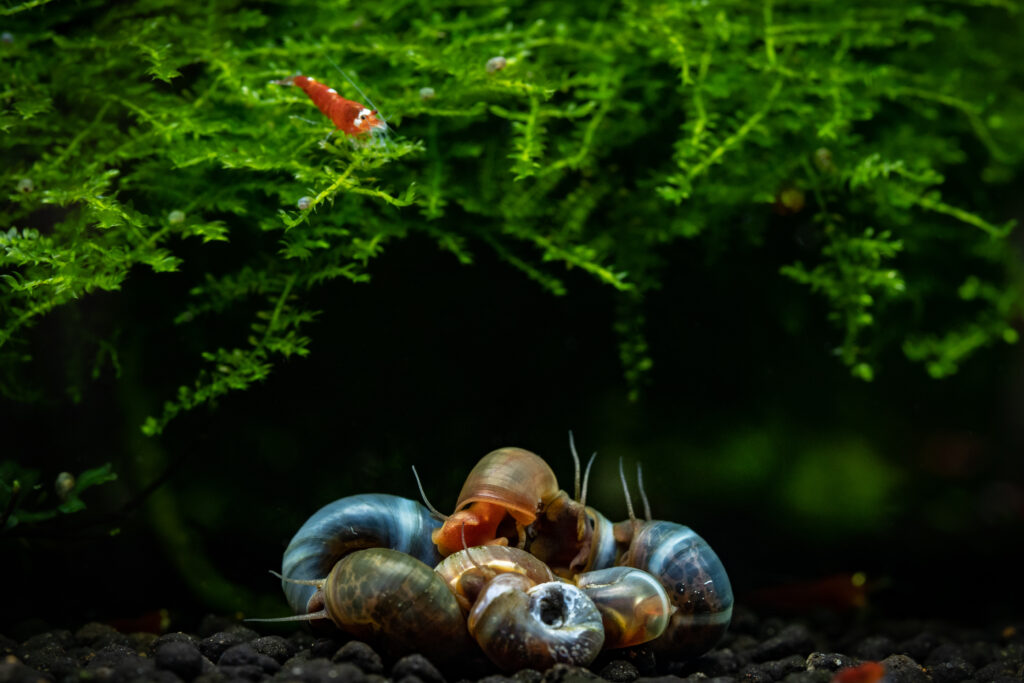
If you’re looking for a peaceful, algae-grazing companion that adds color and personality to your aquarium, Mystery Snails are a fantastic choice. Available in a range of colors, especially the popular blue mystery snail, these freshwater snails are easy to care for and make a great addition to community tanks.
In this Mystery Snails Care Guide with Aquarium Nerd, we’ll cover everything you need to know from mystery snail tank setup to feeding, water parameters, breeding, and how to care for baby mystery snails.
1. Mystery Snails Tank Set Up
Tank Size
We recommend at least a 5-gallon tank for a single Mystery Snail, but a 10-gallon or larger tank provides better stability and more grazing area. If you’re planning to keep multiple snails or mix them with fish, larger tanks reduce waste buildup and provide more algae growth for them to feed on.
Lighting
Mystery Snails don’t need special lighting, but low to moderate LED lighting (6–8 hours/day) supports healthy plant growth and algae production – both of which benefit your snails. Avoid excessive light, which may cause nuisance algae to grow too quickly.
Filtration & Heater
Use a sponge filter or gentle HOB (hang-on-back) filter with a pre-filter sponge to prevent snails from getting stuck in the intake.
Mystery Snails are comfortable in a wide range of temperatures but do best at 72-78°F (22-26°C). If your room temperature drops often, a small adjustable aquarium heater ensures consistency and prevents stress.
Substrate
Mystery Snails don’t burrow, so substrate choice comes down to aesthetics and safety. Smooth gravel, sand, or planted substrates all work well. Darker substrates enhance the color of snails, especially blue mystery snails – making them stand out beautifully. For raising baby mystery snails, sand or fine gravel prevents injuries and makes it easier for them to find food.
2. Mystery Snails Water Parameters, Maintenance
Water Parameters
- Temperature: 72 – 78°F (22 – 26°C)
- pH Level: Between 7.0 – 8.0
- Water Hardness (GH): 6 – 12 dGH
- Carbonate Hardness (KH): 3 – 12 dKH
- Ammonia & Nitrite: Always 0 ppm.
- Nitrate: < 20 ppm
Maintenance
Weekly:
- Perform a 10–25% water change with dechlorinated water.
- Remove leftover food or debris from the substrate.
- Check shell condition for pitting or flaking.
Monthly:
- Clean your filter media with old tank water (not tap water).
- Test your water parameters to ensure they’re still in range.
3. Plants, Hideouts, and Decorations
Aquatic Plants For Mystery Snails
Mystery Snails thrive in planted aquariums. They won’t eat healthy plants, but will happily clean algae off leaves. Good options include:
- Java Fern
- Anubias
- Cryptocoryne
- Vallisneria
- Marimo Moss Balls (a favorite grazing surface)

Mystery Snails Hideouts and Caves
While not shy, Mystery Snails do appreciate shaded areas and shelters to rest. Provide:
- Smooth rock caves
- Driftwood with crevices
- Ceramic shrimp/snail tubes
- Dense plant groupings
Avoid sharp decorations that could scratch their bodies or shells.
4. Mystery Snails Foods, Feeding & Nutrition
What Do Mystery Snails Eat
In the wild, they feed on algae and decaying plant matter. In aquariums, they should be given a varied diet, including:
- Algae and biofilm (their natural food source)
- Algae wafers
- Blanched vegetables (zucchini, spinach, cucumber, lettuce)
- Calcium-rich supplements or cuttlebone
- Commercial snail foods
They will not eat healthy live plants, making them community-safe.
Feeding Schedule
- Feed 2–3 times per week in algae-rich tanks.
- Feed every other day in very clean tanks with little biofilm.
Remove uneaten food after 4–6 hours to avoid water pollution.
Feeding Tips
- Place food near their resting spot to encourage activity.
- Offer a variety of foods for better shell health and nutrition.
- Supplement with cuttlebone or snail calcium blocks to prevent shell thinning.
5. Mystery Snails Frequently Asked Questions
How Long Do Mystery Snails Live?
Mystery Snails typically live 1 to 2 years, though some can reach up to 3 years with excellent care. Their lifespan depends heavily on water quality, diet, and temperature stability. A well-maintained mystery snail tank setup with stable water parameters, calcium-rich food, and regular maintenance will help them reach their maximum lifespan. Stress factors like sudden temperature swings, exposure to copper, or aggressive tank mates can shorten their life expectancy.
What Do Mystery Snails Eat?
Mystery Snails are natural scavengers. In aquariums, they graze on algae, biofilm, leftover fish food, and decaying plant matter. To keep them healthy and ensure good shell growth, supplement their diet with:
- Algae wafers or commercial snail foods
- Blanched vegetables like zucchini, spinach, cucumber, and lettuce
- Calcium supplements or cuttlebone for strong shells
They won’t eat healthy live plants, but they will happily clean algae off leaves. If you own a blue mystery snail or other varieties, their feeding habits remain the same. Proper nutrition also helps female snails recover after laying mystery snail eggs.
How Big Do Mystery Snails Get?
Mystery Snails can grow up to 2 inches (5 cm) in diameter, making them one of the larger freshwater snail species. They start out tiny, especially baby mystery snails that hatch from eggs, but with enough food and minerals, they can grow quickly. Growth rate is strongly influenced by:
- Diet quality – calcium-rich foods promote healthy shell development
- Water hardness – soft water can stunt growth and weaken shells
- Tank size – larger tanks provide more surface area for grazing and help them thrive
Compared to Nerite Snails, Mystery Snails are noticeably bigger and more visible in community tanks.
Mystery Snail Tank Mates
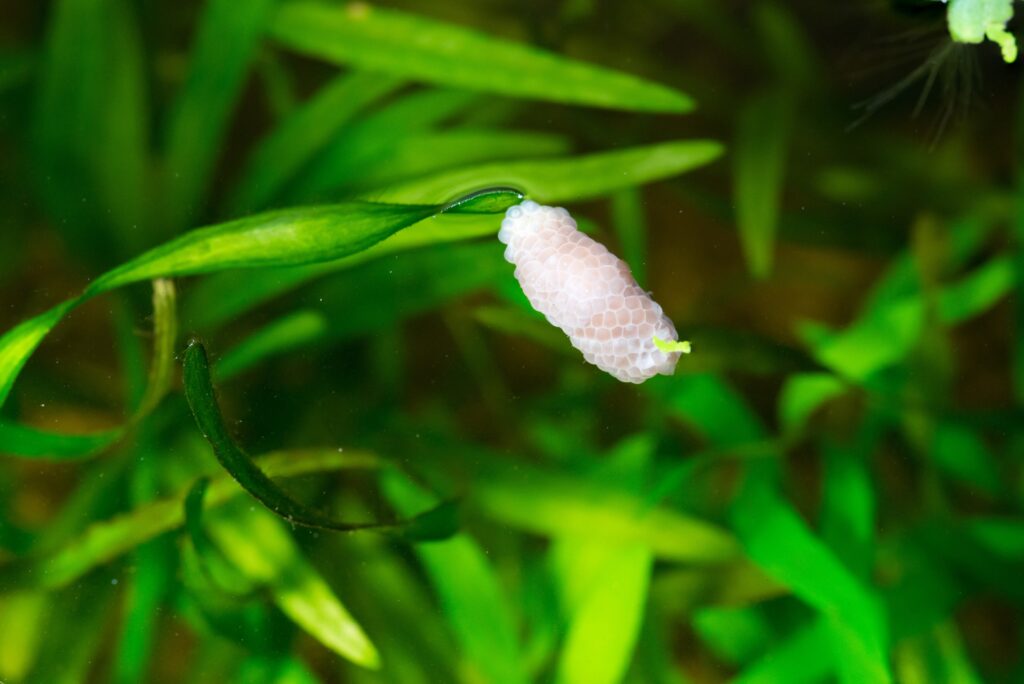
Yes, but with a unique twist. Mystery Snails are gonochoristic, meaning you need a male and female for reproduction. Females lay mystery snail eggs above the waterline, usually as pink or white clusters. These eggs can hatch into baby mystery snails within 2–4 weeks if kept warm and humid.
Unlike Nerite Snails, their eggs will hatch in freshwater. If you don’t want babies, simply remove the clutches before they develop. If you do want to raise them, lower the waterline slightly and cover the tank to maintain humidity.
Conclusion
Mystery Snails are one of the most beginner-friendly and rewarding freshwater snails you can add to your aquarium. With their algae-eating habits, peaceful nature, and fascinating behavior, they bring both beauty and balance to any tank. Whether you’re caring for a striking blue mystery snail or raising a clutch of baby mystery snails, this care guide of Aquarium Nerd gives you everything you need to keep them healthy and happy.