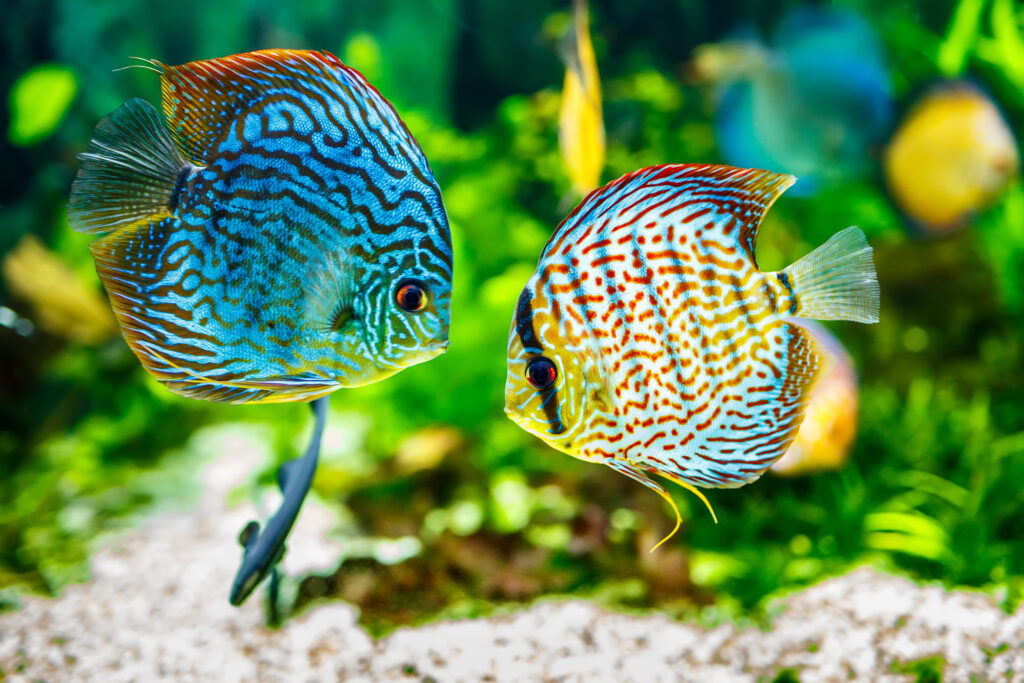
Known as the “king of the aquarium,” the Discus fish (Symphysodon aequifasciatus) is one of the most beautiful and graceful freshwater fish in the hobby. Their round bodies, striking colors, and calm movements make them the centerpiece of any aquarium. However, Discus require a bit more attention than most tropical fish.
This Discus fish care guide of Aquarium Nerd will walk you through everything you need to know – from tank setup and water parameters to feeding, tank mates, and long-term discus care – so your fish can live a healthy, vibrant life.
Discus Fish Tank Set Up

Tank Size
Discus need space. As medium to large freshwater fish, they thrive in a minimum 55-gallon tank for a small group of 5-6 fish. These fish are social and do best in schools, so a larger tank not only improves their comfort but also stabilizes water quality. For a show tank or breeding pair, a 75-100 gallon setup is ideal.
Lighting
Discus fish prefer soft, subdued lighting that mimics their natural Amazon habitat. Intense light can stress them out, so use dimmable LEDs or diffuse the light with floating plants. Moderate lighting also helps plants grow without causing discomfort to your discus.
Filtration & Heater
Because Discus are sensitive to poor water quality, a powerful yet gentle filtration system is crucial. Canister filters or sponge filters are ideal since they provide excellent biological filtration while keeping flow calm.
- Heater: Discus thrive in warm water – between 82-88°F (28-31°C).
- Always use a reliable heater with a thermostat, as temperature fluctuations can cause stress or illness.
Maintaining stable temperature and pristine water is the foundation of successful discus care.
Substrate
A fine sand or smooth gravel substrate works best for Discus tanks. These freshwater fish prefer calm, soft environments, and sand substrates resemble their natural riverbed habitat. Choose light colors if you want their vivid blues, reds, and greens to stand out more.
Discus Fish Water Parameters, Maintenance
Water Parameters
Discus are sensitive to changes, so consistent water chemistry is key.
- Temperature: 82-88°F (28-31°C)
- pH: 6.0-7.0 (slightly acidic)
- GH (General Hardness): 1-8 dGH
- KH (Carbonate Hardness): 1-3 dKH
- Ammonia/Nitrite: 0 ppm
- Nitrate: < 20 ppm
Since they originate from soft, warm Amazonian waters, maintaining clean and stable conditions is vital for their health and longevity. Proper care ensures a healthy discus fish lifespan of 10-15 years, and sometimes even longer under excellent care.
Maintenance
- Perform 25-30% weekly water changes to maintain water quality.
- Use a siphon vacuum to remove waste and uneaten food from the substrate.
- Clean filters monthly using tank water to preserve beneficial bacteria.
- Monitor water temperature and pH regularly – even small fluctuations can impact your fish.
Consistent maintenance is the heart of proper discus care and key to ensuring your fish stay stress-free and colorful.
Plants, Hideouts, and Decorations
Aquatic Plants For Discus Fish
While some aquarists keep bare-bottom tanks for easier cleaning, planted tanks can provide comfort and stability for Discus. The best plants for discus fish are those that thrive in warm water:
- Amazon Sword (Echinodorus amazonicus) – A hardy, broad-leaved plant that provides shade and enhances the natural Amazon look.
- Anubias – Tolerates low light and high temperature, offering perfect resting leaves for Discus.
- Java Fern – Durable and slow-growing, suitable for beginners and pros alike.
- Vallisneria – Creates tall, waving backgrounds that help Discus feel secure.
Plants help oxygenate the tank and reduce nitrates, creating a balanced ecosystem for your freshwater fish.
Discus Fish Hideouts and Caves
Discus prefer open swimming space but still appreciate some shaded areas for rest and security.
- Use driftwood to recreate their natural Amazon habitat.
- Add rock structures or clay caves for privacy during breeding.
- Avoid sharp decorations that can damage their delicate bodies.
A mix of open swimming zones and subtle hiding spots encourages natural, confident behavior in your Discus.
Discus Fish Foods, Feeding & Nutrition
What Do Discus Fish Eat?
Discus are omnivorous but thrive on a protein-rich diet. A variety of high-quality foods supports color development, breeding, and overall health. Recommended discus food includes:
- High-protein pellets or flakes made for freshwater fish.
- Frozen or live foods: Bloodworms, brine shrimp, and beef heart.
- Occasional plant matter: Spirulina flakes or blanched spinach for fiber.
A balanced diet is essential for long-term discus care, keeping their colors vivid and immune system strong.
Feeding Schedule
Feed adult Discus 2-3 times per day in small portions that they can finish within a few minutes. Young or growing Discus may need feeding up to 4 times a day for faster growth. Consistent feeding routines prevent stress and overeating, which can foul the water.
Feeding Tips
- Remove uneaten food after each feeding to maintain water quality.
- Rotate between pellet, frozen, and live foods for variety.
- Avoid overfeeding – Discus prefer multiple small meals over one large one.
- Supplement with color-enhancing foods to maintain the vivid hues of fancy Discus fish varieties.
Discus Fish Frequently Asked Questions (FAQ)
Are Discus Fish Aggressive?
Discus are generally peaceful freshwater fish, but they can show mild territorial behavior during breeding or feeding. They establish hierarchies within their group but rarely cause harm. Keeping them in groups of at least 5-6 helps spread out any dominance displays.
How Big Do Discus Fish Get?
Adult discus fish can grow up to 6-8 inches (15-20 cm) in diameter. Their size depends on genetics, diet, and water quality. Providing adequate space and a high-protein diet is essential for achieving their full potential.
Why Are Discus Fish so Expensive?
Discus are more expensive than most freshwater fish due to selective breeding, slow growth rates, and the care required to maintain them. Quality strains like Blue Diamond, Pigeon Blood, and Turquoise Discus are bred for vibrant colors and perfect round shapes, making them highly sought after in the hobby.
Are Discus Fish Hard To Keep?
Discus have a reputation for being challenging, but with proper discus care, they are manageable even for intermediate aquarists. They require warm, clean, stable water and consistent maintenance. If you can keep your parameters steady and feed them a balanced diet, they’ll reward you with years of graceful beauty – the typical discus fish lifespan is 10-15 years.
Conclusion
The discus fish is one of the most stunning and rewarding freshwater fish to keep. While they demand more care than average community species, their elegance and personality make the effort worthwhile.By following this discus fish care guide, maintaining stable warm water, feeding a nutritious varied diet, and providing plenty of space, your fish can live a long, healthy life. With proper discus care, these majestic fish can reach their full potential – both in beauty and longevity – and become the true centerpiece of your aquarium.