When it comes to hardy and beginner-friendly aquatic plants, few are as versatile and forgiving as Java Moss (Taxiphyllum barbieri). This popular aquarium moss is loved for its soft, feathery texture, low maintenance requirements, and ability to thrive in nearly any tank condition.
Whether you’re building a shrimp tank, breeding fish, or designing a lush aquascape, adding Java Moss to your Java Moss aquarium setup can instantly improve water quality and provide natural shelter. In this guide with Aquarium Nerd, we’ll walk through everything you need to know about Java Moss care, including lighting, Java Moss water parameters, common problems, and ideal tank mates.
Why Should You Have Java Moss for Your Aquarium?
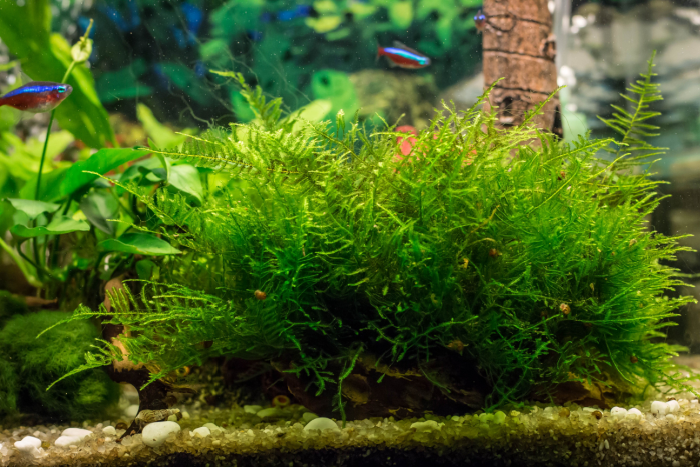
Java Moss is one of the most adaptable aquatic plants in the hobby. It grows in low light, doesn’t require CO₂ injection, and attaches easily to driftwood, rocks, or decorations. That makes it perfect for beginners and experienced aquarists alike.
Here’s why many aquarists choose this aquarium moss:
- Provides shelter for baby shrimp and fry
- Absorbs excess nutrients, helping reduce algae
- Improves biological filtration
- Creates a natural, forest-like aesthetic
- Requires minimal maintenance
Because of its flexibility, Java Moss works in almost any Java Moss aquarium design — from nano tanks to large planted displays.
Java Moss Care Requirements
Lighting
Java Moss thrives in low to moderate lighting. Too much light can encourage unwanted algae growth, especially if nutrients are high. For proper java moss care, keep lighting on for 6–8 hours per day.
In low-light tanks, this aquarium moss grows slowly but steadily. Moderate lighting promotes fuller, denser growth without stressing the plant.
Temperature
Java Moss is highly adaptable and tolerates a wide range of temperatures. Ideal temperature range for a java moss aquarium is:
- 68–78°F (20–26°C)
It can survive slightly cooler or warmer conditions, making it one of the most flexible aquatic plants available.
Tank Parameters
Stable water conditions are more important than exact numbers. Ideal Java Moss water parameters include:
- pH: 6.0–7.5
- GH: 3–10 dGH
- KH: 2–8 dKH
- Ammonia/Nitrite: 0 ppm
- Nitrate: < 30 ppm
Because Java Moss absorbs nutrients directly from the water column, consistent water changes help maintain healthy growth. Good Java Moss care focuses on stability and cleanliness.
Substrate
Java Moss does not require substrate. Unlike many aquatic plants, it doesn’t root in gravel or sand. Instead, attach it to:
- Driftwood
- Rocks
- Decorations
- Mesh pads
Over time, it naturally anchors itself to surfaces, making it one of the easiest aquarium moss species to manage.
Fertilizers
Java Moss does not require heavy fertilization. In most Java Moss aquarium setups with fish or shrimp, natural waste provides enough nutrients.
If growth is slow, you can use:
- Liquid fertilizers (in small doses)
- Occasional trace element supplements
Avoid overdosing fertilizers, as excess nutrients can cause algae to overtake your aquarium moss.
Common Problems and Solutions
Even though Java Moss is hardy, some issues can arise:
- Problem: Brown or Yellow Moss
– Cause: Poor water quality or excessive light
– Solution: Improve water changes and reduce lighting intensity - Problem: Algae Growth on Moss
– Cause: Too much light or excess nutrients
– Solution: Reduce light duration, add algae-eating tank mates, increase maintenance - Problem: Moss Falling Apart
– Cause: Sudden parameter changes
– Solution: Stabilize Java Moss water parameters and avoid large water changes
Proper Java Moss care is mainly about consistency and balance.
Java Moss Tank Mates
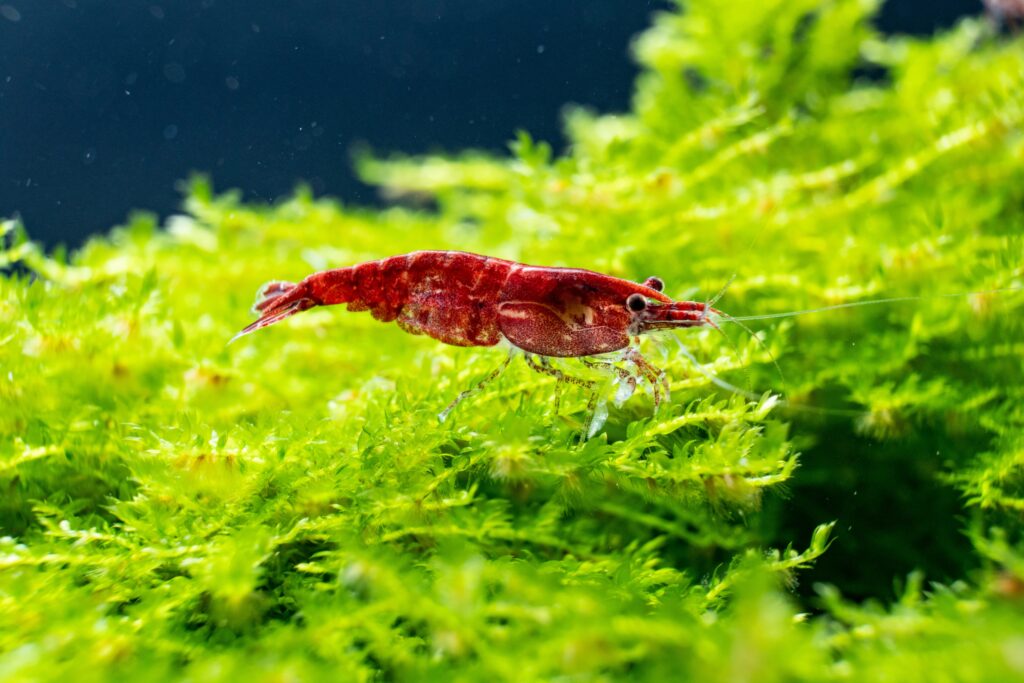
Java Moss pairs well with many peaceful aquarium species. Ideal tank mates include:
- Shrimp (Neocaridina, Caridina)
- Small Tetras
- Rasboras
- Corydoras Catfish
- Snails
Shrimp especially love aquarium moss, as it collects biofilm — their natural food source. In a shrimp tank, Java Moss becomes both shelter and grazing ground.
Avoid large or aggressive fish that may tear apart delicate aquatic plants.
Java Moss Care Frequently Asked Questions (FAQs)
How Fast Does Java Moss Grow?
Java Moss is a slow to moderate grower. Under proper java moss care with stable lighting and clean water, it will steadily spread and thicken. Growth rate depends on light, nutrients, and temperature.
Does Java Moss Spread?
Yes, Java Moss naturally spreads by attaching to nearby surfaces. In a well-maintained java moss aquarium, it can gradually cover driftwood, rocks, and decorations, creating a lush carpet effect.
Can Java Moss Grow Out Of Water?
Yes, Java Moss can grow partially out of water in humid environments, such as paludariums. However, it must remain moist at all times. Many aquascapers use this feature creatively in terrariums or waterfall setups.
Conclusion
Java Moss is one of the most reliable and beginner-friendly aquatic plants available today. Whether you’re designing a shrimp tank, breeding setup, or lush planted aquarium, this hardy aquarium moss adapts to nearly any environment. By maintaining stable Java Moss water parameters, moderate lighting, and regular water changes, your Java Moss aquarium will thrive with minimal effort. If you’re looking for a low-maintenance, versatile plant that benefits both fish and invertebrates, Java Moss is the perfect choice.