The Guppy fish (Poecilia reticulata) is one of the most popular freshwater fish in the aquarium hobby. Known for their bright colors, active swimming, and easy care requirements, guppies are ideal for both beginners and experienced aquarists. Whether you’re raising a single fancy guppy fish or building a thriving guppy community, this Guppies Fish Care Guide For Beginners of Aquarium Nerd will give you everything you need to know about their tank setup, feeding, maintenance, and compatibility.
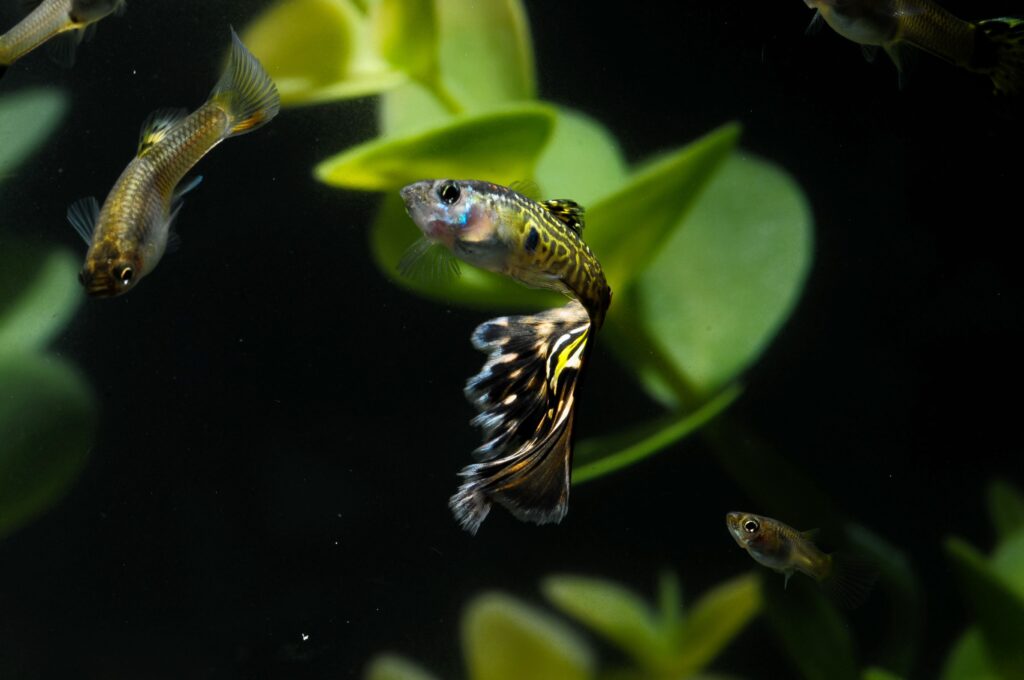
Guppies Fish Tank Set Up
Tank Size
Guppies are small, but they are active swimmers. A 10-gallon tank is the minimum for a small group of guppies, while a 20-gallon or larger tank is recommended if you plan to keep a community or breed them. More space reduces stress, provides better water stability, and allows for natural schooling behavior.
Lighting
Guppies do not need intense lighting, but moderate LED lights (6–8 hours per day) bring out their vibrant colors, especially in fancy guppy fish. Live plants also benefit from proper lighting, creating a healthier ecosystem.
Filtration & Heater
A good filter is essential to keep guppy tanks clean. Sponge filters or hang-on-back filters with gentle flow work well.
- Heater: Maintain water between 74–82°F (23–28°C). Stable temperatures promote healthy growth and extend guppy fish lifespan.
- Guppies are hardy, but sudden temperature drops can weaken their immune system.
Substrate
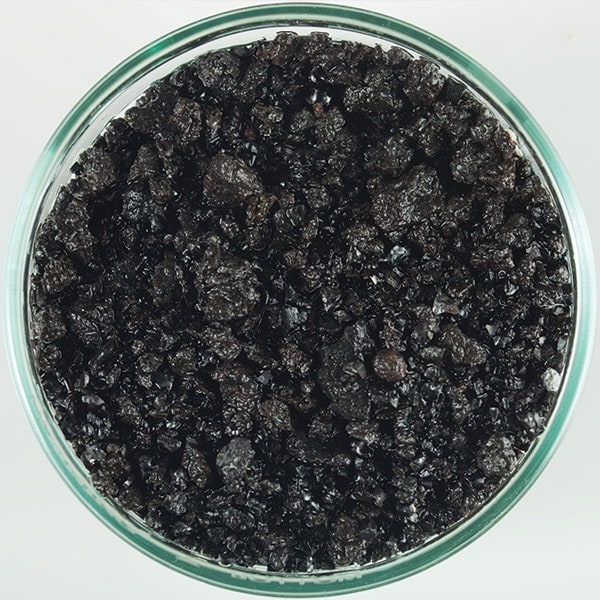
Guppies aren’t picky about substrate, but fine gravel or sand works best. A darker substrate will make their bright colors stand out. If you plan to keep live plants, nutrient-rich substrate helps support growth.
Guppies Fish Water Parameters, Maintenance
Water Parameters
Maintaining stable water is essential for guppy health and breeding success:
- Temperature: 74-82°F (23-28°C)
- pH: 6.8-7.8
- GH: 8-12 dGH
- KH: 4-8 dKH
- Ammonia & Nitrite: 0 ppm
- Nitrate: Below 20 ppm
Maintenance
- Perform 20-30% weekly water changes.
- Regularly test water parameters using a reliable kit.
- Rinse filter media monthly using old tank water to preserve beneficial bacteria.
- Remove uneaten food to prevent ammonia spikes.
Plants, Hideouts, and Decorations
Aquatic Plants For Guppies Fish
Live plants are excellent additions to a guppy tank. They improve water quality, provide oxygen, and create natural hiding places for fry (baby guppies). The best options include:
- Java Fern
- Anubias
- Hornwort
- Water Wisteria
- Duckweed or Frogbit (floating plants)
Guppies Fish Hideouts and Caves
While guppies are active and not shy, they still benefit from hiding places. Driftwood, smooth stones, and small caves provide resting spots and reduce stress. Fry especially need dense plant cover or caves to survive in community tanks.
Guppies Fish Foods, Feeding & Nutrition
What Do Guppies Fish Eat?
Guppies are omnivores, meaning they eat both plant-based and protein-rich foods. A balanced diet is key to vibrant colors and a long guppy fish lifespan.
- Staple: High-quality flakes or micro-pellets for tropical freshwater fish.
- Protein: Brine shrimp, daphnia, bloodworms (live or frozen).
- Vegetables: Blanched spinach, cucumber, or spirulina-based foods.
Feeding Schedule
Feed guppies 1-2 times daily in small portions they can consume within 2-3 minutes. Overfeeding can lead to poor water quality.
Feeding Tips
- Rotate food types for complete nutrition.
- Feed baby guppies (fry) crushed flakes, powdered fry food, or baby brine shrimp.
- Protein-rich diets bring out the best colors in fancy guppy fish.
Guppies Fish Frequently Asked Questions (FAQ)
Are Guppies Fish Aggressive?
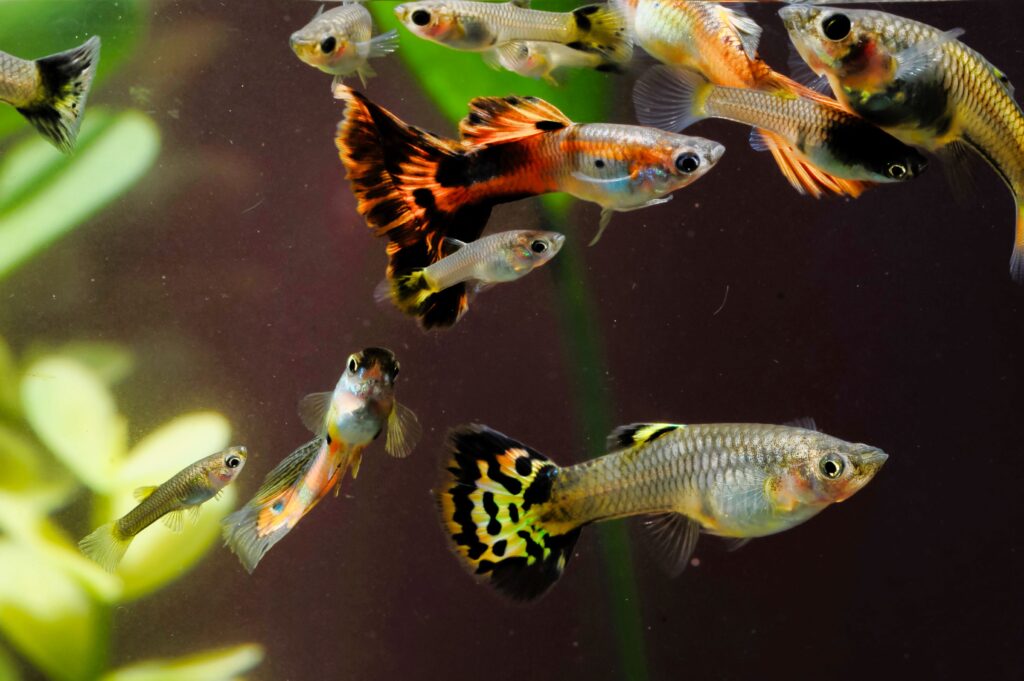
Guppies are generally peaceful community fish, which is why they’re so popular with beginners. They don’t have aggressive tendencies like cichlids or bettas, but male guppies can sometimes chase each other or nip fins when competing for females. This behavior is not true aggression-it’s more of a natural courtship display.
If you notice excessive chasing, it’s often because there are too many males in the tank. A good rule of thumb in guppy fish care is to keep a 1 male to 2-3 females ratio. This balance reduces stress on the females and keeps males from constantly competing. Another tip is to provide plenty of plants and decorations to give weaker fish places to retreat. With the right setup, guppies remain calm, colorful, and active without harming their tank mates.
Are Guppies Schooling Fish?
Technically, guppies are not schooling fish in the same way as tetras or rasboras are. Instead, they are considered shoaling fish, meaning they prefer the company of their own kind but don’t swim in tight formations. You’ll often see them loosely grouping together, especially when they feel threatened or during feeding time.
For best results, keep guppies in groups of 6 or more. A larger group reduces stress and helps them display more natural behavior. In smaller numbers, guppies may become skittish or stressed. In larger colonies, you’ll notice their vibrant colors and playful interactions come to life, making them one of the most entertaining freshwater fish to keep.
Can Betta Fish Live With Guppies?
This is one of the most common questions in guppies fish care, and the answer is: sometimes. Betta fish are known for their territorial and sometimes aggressive nature, while guppies are peaceful. The issue is that male guppies often have bright, flowing tails that can resemble bettas, which may trigger the betta to attack.
If you want to try keeping bettas and guppies together, follow these guidelines:
- Tank Size: Use a 20-gallon or larger tank to give both species enough space.
- Tank Setup: Add live plants, caves, and decorations to break up sightlines and provide hiding spots.
- Betta Temperament: Not all bettas are aggressive. Some are calm enough to tolerate guppies, while others will see them as rivals. Monitor behavior closely in the first few days.
- Backup Plan: Always have a separate tank or divider ready in case the betta becomes aggressive.
Conclusion
Guppies are among the most rewarding freshwater fish to keep. With proper care, stable water conditions, and a healthy diet, these vibrant fish can live 2–3 years or longer. Whether you’re caring for a small group or breeding fancy guppy fish, following this guppies fish care guide will help you create a thriving, colorful aquarium.
By giving them the right tank setup, balanced diet, and peaceful companions, your guppies will display their best colors and active personalities, making them one of the most enjoyable aquarium species for beginners and seasoned aquarists alike.